
Nearly 27.5 million Americans were without insurance in 2020. This shows how hard it is to find affordable healthcare.
The GetCoveredNJ Shop and Compare Tool helps people compare health plans. It makes it easier to find the right one.

Choosing the right medical coverage is more than picking a cheap plan. You need to think about all healthcare costs and if you can get help paying for it.
Key Takeaways
- Compare health plans using tools like GetCoveredNJ Shop and Compare Tool.
- Consider total healthcare expenses, not just monthly premiums.
- Check eligibility for financial assistance.
- Understand the different types of medical coverage available.
- Evaluate the network and coverage of possible plans.
Understanding Health Insurance Basics
It’s key to know the basics of health insurance to make smart choices about your coverage. Health insurance is a big part of planning your finances. It helps protect you from big medical bills.
Key Health Insurance Terminology
Learning important health insurance terms is a must. Words like premium, deductible, copayment, and coinsurance are essential. For example, your premium is what you pay each month for your plan.
Coinsurance is the part of medical costs you pay after your deductible. Knowing these terms helps you use your plan better.
How Health Insurance Works
Health insurance plans share the cost of medical bills between you and the provider. When you sign up, you pay a monthly premium. The provider then covers part of your medical costs, based on your plan.
What’s covered and how much varies by plan. Some plans might have lower premiums but higher deductibles. Others might offer more coverage for a higher premium.
The Importance of Adequate Coverage
Having enough health insurance is vital for your financial health. Medical bills can be very high. Without insurance, these costs can hurt your finances a lot.
Good coverage lets you get the healthcare you need without financial trouble. It’s not just about following the law. It’s about keeping your health and finances safe.
Types of Health Insurance Plans
There are many health insurance options out there. It’s important to know what each plan offers. This knowledge helps you choose the right medical coverage for you.

Health Maintenance Organization (HMO) Plans
Overview
HMO plans mean you get care from a set group of doctors. They often cost less but might limit your choice of healthcare providers.
Pros
- Lower premiums: HMO plans are usually cheaper.
- Predictable costs: You know what to expect with copays and deductibles.
- Coordinated care: HMOs focus on preventive care.
Cons
- Limited provider choice: You can only see doctors in the HMO network.
- Referrals required: You need a referral to see a specialist.
- Out-of-network care is not covered except in emergencies.
Best For
HMO plans are good for those who want affordable health insurance. They’re for people who are okay with using a specific network of providers.
Preferred Provider Organization (PPO) Plans
Overview
PPO plans give you more freedom. You can see any doctor, in-network or out-of-network, but at different costs.
Pros
- Flexibility: You can choose any healthcare provider.
- No referrals needed: You can see specialists directly.
- Out-of-network coverage: You can get care outside the network, but it costs more.
Cons
- Higher premiums: PPO plans are more expensive.
- Higher deductibles and copays for out-of-network care.
Best For
PPO plans are great for those who want to choose their healthcare providers. They’re for people who are willing to pay more for this freedom.
Exclusive Provider Organization (EPO) Plans
Overview
EPO plans offer a mix of HMO and PPO features. They have a network of preferred providers but don’t cover out-of-network care except in emergencies.
Pros
- Lower premiums compared to PPO plans.
- No referrals needed for specialists within the network.
Cons
- No out-of-network coverage except in emergencies.
- Network limitations.
Best For
EPO plans are for those who want a balance between cost and flexibility. They’re for people who understand that out-of-network care is usually not covered.
Point of Service (POS) Plans
Overview
POS plans combine HMO and PPO features. You need to choose a primary care physician but can also see out-of-network doctors at a higher cost.
Pros
- Flexibility to go out-of-network, though at a higher cost.
- Coordinated care through a primary care physician.
Cons
- More complex to manage due to the mix of in-network and out-of-network care.
- Higher costs for out-of-network care.
Best For
POS plans are good for those who want a mix of HMO and PPO benefits. They’re for people who want a balance between structure and flexibility.
Health Insurance Marketplace vs. Employer-Sponsored Coverage
Choosing between a Health Insurance Marketplace plan and employer-sponsored coverage depends on several things. These include costs, benefits, and personal circumstances. It’s important to understand these to make a choice that fits your health care needs and budget.
Comparing Costs and Benefits
When looking at costs, remember not just the premium but also out-of-pocket expenses. Employer-sponsored plans often have the employer paying a big part of the premium. This can make the plan cheaper for you. On the other hand, Health Insurance Marketplace plans require you to pay the full premium, but you might get subsidies.
Here’s a table showing the main differences in costs and benefits:
| Feature | Health Insurance Marketplace | Employer-Sponsored Coverage |
| Premium Costs | Full premium paid by individual; subsidies available | Shared premium costs between employer and employee |
| Deductibles and Copays | Varies by plan | Varies by plan, often lower for in-network services |
| Network | Varies by plan; may have narrower networks | Often has a broader network of providers |
Eligibility Requirements
Health Insurance Marketplace plans are open to those not covered by work or other essential coverage. Who gets employer-sponsored coverage depends on the company, but it’s usually for full-time workers.
Enrollment Periods and Special Exceptions
The Open Enrollment for Health Insurance Marketplace plans starts on November 1. There are Special Enrollment Periods (SEPs) for big life events like losing a job or getting married. Employer plans have their own enrollment times, often during the annual open enrollment or when you start working.

Subsidy Opportunities
Eligible people buying Health Insurance Marketplace plans can get subsidies to lower their premiums. These subsidies don’t apply to employer plans, but some employers offer Health Reimbursement Arrangements (HRAs) or other benefits to help with costs.
By looking at these factors, you can decide if a Health Insurance Marketplace plan or employer-sponsored coverage is better for you.
Evaluating Health Insurance Coverage Options
Understanding health insurance coverage is key to making a smart choice. It’s important to evaluate options to ensure you have the right protection for your health.
Essential Health Benefits
Look at the Essential Health Benefits (EHBs) covered by the plan. These include:
- Ambulatory patient services
- Emergency services
- Hospitalization
- Maternity and newborn care
- Mental health and substance use disorder services
It’s vital to make sure your plan covers these essential benefits for full care.
Prescription Drug Coverage
Another key aspect is prescription drug coverage. Check if your plan covers your needed medications. Also, understand the costs, like copays or coinsurance.

Specialist Care Access
Access to specialist care matters too. Some plans need a referral from your primary doctor. Others let you see specialists directly.
Mental Health and Preventive Services
Lastly, look at coverage for mental health services and preventive services. A good plan should cover mental health, like therapy, and preventive care, like shots and screenings.
By carefully looking at these points, you can pick a health insurance plan that fits your health care needs well.
Understanding Health Insurance Costs
Health insurance costs are more than just the monthly premium. It’s important to understand all costs involved. This helps you make smart choices when picking a plan.
Premium Calculations
The premium is your monthly payment for health insurance. Premium calculations depend on your age, where you live, and the coverage level. Knowing how premiums are figured can help you find a plan that fits your budget.
Deductibles and Their Impact
A deductible is what you pay first before insurance kicks in. Plans with lower premiums often have higher deductibles. It’s key to see if you can handle the deductible if you need medical care.
Copayments vs. Coinsurance
Copayments are fixed costs for certain services. Coinsurance is a percentage of costs after the deductible. Knowing the difference helps predict your healthcare costs.
Out-of-Pocket Maximums
The out-of-pocket maximum is the yearly cap on healthcare costs. Once you hit this, your insurance covers 100% of eligible costs. Knowing this can help with budgeting for healthcare.
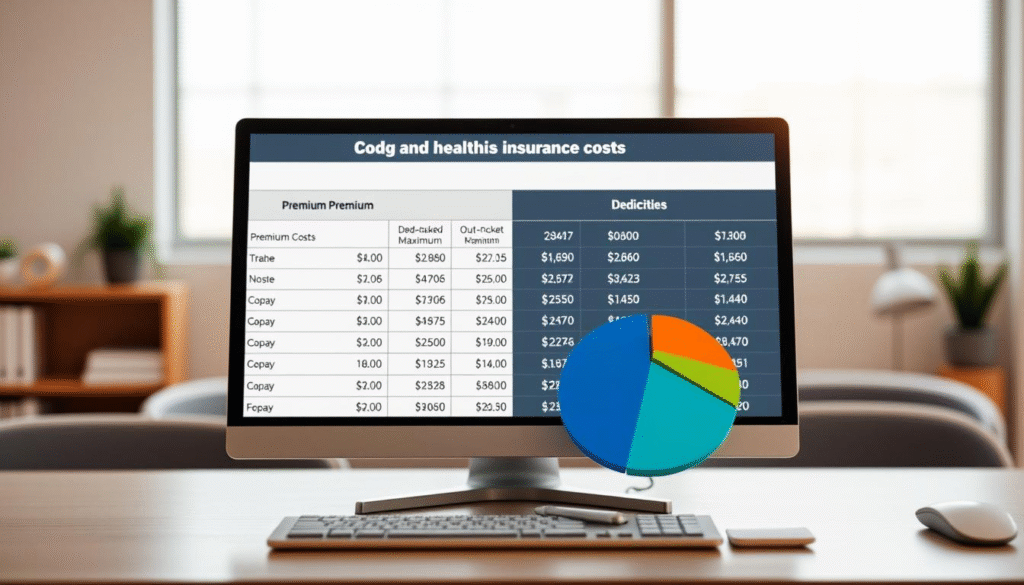
| Cost Component | Description | Impact on Healthcare Costs |
| Premium | Monthly payment for insurance coverage | Influences overall cost of insurance |
| Deductible | Amount paid before insurance kicks in | Affects out-of-pocket expenses |
| Copayment/Coinsurance | Fixed amount or percentage paid for services | Impacts cost per healthcare visit or service |
| Out-of-Pocket Maximum | Maximum annual expenditure for healthcare | Limits total annual healthcare costs |
Health Savings Accounts and Tax-Advantaged Options
Understanding health savings accounts, flexible spending accounts, and health reimbursement arrangements is key. These options help manage healthcare costs. They offer tax benefits for individuals and families.
Health Savings Account (HSA) Benefits
A Health Savings Account (HSA) is for those with high-deductible health plans. Contributions are tax-deductible. The funds can cover qualified medical expenses.
One big plus of HSAs is that the money stays in the account year after year. This builds a safety net for future health costs.
Flexible Spending Accounts (FSAs)
Flexible Spending Accounts (FSAs) let you save pre-tax dollars for health expenses. Unlike HSAs, FSAs have a use-it-or-lose-it rule. This means any unused money is lost at year-end.
But, some employers offer grace periods or carryover options. This helps reduce the risk of losing money.
Health Reimbursement Arrangements (HRAs)
Health Reimbursement Arrangements (HRAs) are funded by employers. They reimburse employees for health expenses. HRAs can cover many costs, like deductibles and copays.
One great thing about HRAs is they can work with other health insurance plans.
Comparing Tax Benefits
When looking at health savings accounts and other options, tax benefits are important. HSAs, FSAs, and HRAs all have tax perks. But, the details differ.
For example, HSA contributions are tax-deductible, and withdrawals for medical expenses are tax-free. FSA contributions are also tax-deductible, but withdrawals are only tax-free for medical expenses.
Finding Affordable Health Insurance for Different Life Stages
Life is always changing, and so should your health insurance. Whether you’re young, starting a family, getting older, or retired, knowing your options is key.
Young Adults and New Graduates
Health insurance might seem pricey for young adults and new grads. But, many providers offer affordable plans for them. These plans include important health benefits like check-ups and mental health services.
Families with Children
Families with kids need special care, like vaccinations and visits to specialists. Family plans can meet these needs, often with discounts for everyone in the family.
Adults Approaching Retirement
As you get closer to retirement, your insurance needs might shift. You might want plans that cover more, like dental and vision care, to prepare for the future.
Retirees Before Medicare Eligibility
If you retire before 65, finding affordable insurance is vital. You might look into COBRA or individual plans through the marketplace for coverage.
To check out your options, visit your local Blue Cross and Blue Shield (BCBS) website. They have plans for all life stages and needs.
Finding the right health insurance plan means thinking about your current and future needs. By understanding your options, you can choose a plan that protects you and your family.
- Assess your current health needs.
- Consider your budget for premiums and out-of-pocket costs.
- Research available plans and their coverage details.
Special Considerations for Health Insurance Selection
Choosing health insurance can be tricky. You need to think about your health needs and how much you can spend. It’s important to look at special factors that affect your coverage and costs.
Chronic Condition Management
If you have a chronic condition, finding the right insurance is key. Look for plans that cover your ongoing care well. Blue Distinction Specialty Care programs can help you find top doctors and hospitals.
Planned Medical Procedures
Make sure your insurance covers any planned surgeries. Check if it covers hospital stays, surgery costs, and follow-up care. Knowing what you’ll pay out of pocket and any pre-approvals needed is important.
Prescription Medication Needs
Prescription coverage is a big deal. Check the plan’s formulary to see if it covers your meds. Some plans have different levels of coverage, which can change what you pay.
Provider Network Considerations
The network of your insurance plan matters a lot. Make sure your doctors are in the network. Care outside the network costs more, so knowing the network’s range is key.
| Consideration | Factors to Evaluate | Importance |
| Chronic Condition Management | Coverage for medications, specialist visits | High |
| Planned Medical Procedures | Coverage for hospital stays, surgical fees | High |
| Prescription Medication Needs | Formulary coverage, tier structure | High |
| Provider Network Considerations | In-network providers, out-of-network costs | High |
Top Health Insurance Providers Review
Many health insurance providers offer different plans. It’s important to know what each one offers. This helps you choose the best plan for you.
Blue Cross Blue Shield
Overview
Blue Cross Blue Shield is a big name in health insurance. They have plans in many states.
Pros
- Wide network coverage
- Variety of plan options
- Strong customer service
Cons
- Premiums can be high
- Coverage varies by state
Best For
Great for those who want lots of coverage and a big network.
UnitedHealthcare
Overview
UnitedHealthcare is a major player in health insurance. They have a big network and many plan choices.
Pros
- Large network of providers
- Innovative plan options
- Well-established reputation
Cons
- Can be expensive
- Complex plan details
Best For
Good for those who want lots of plan choices and a big network.
| Provider | Network Coverage | Plan Variety | Customer Service |
| Blue Cross Blue Shield | Wide | High | Strong |
| UnitedHealthcare | Large | High | Good |
| Aetna | Moderate | Medium | Fair |
| Kaiser Permanente | Integrated | Medium | Strong |
Aetna
Overview
Aetna focuses on wellness and preventive care. They offer many health insurance plans.
Pros
- Wellness programs
- Flexible plan options
Cons
- Network limitations
- Customer service variability
Best For
Good for those who want plans with wellness benefits.
Kaiser Permanente
Overview
Kaiser Permanente offers both insurance and medical care. They have an integrated healthcare model.
Pros
- Integrated care model
- Strong customer satisfaction
Cons
- Limited geographic availability
- Not available in all states
Best For
Best for those in areas where Kaiser Permanente operates. They seek integrated care.
Conclusion
Choosing the right health insurance plan is very important. It affects your money and your health care. We’ve talked about different plans, how to pick the best one, and the costs involved.
When picking a plan, think about what you need. Look at your health, money situation, and what you want. This helps you find a plan that’s good for you and doesn’t cost too much.
The table below summarizes key factors to consider when choosing a health insurance plan:
| Factor | Description | Importance |
| Health Status | Assess your current health and any ongoing medical needs | High |
| Financial Situation | Consider your budget for premiums, deductibles, and out-of-pocket costs | High |
| Provider Network | Ensure your preferred healthcare providers are included in the plan’s network | Medium |
| Prescription Drug Coverage | Check if the plan covers your necessary medications | High |
In conclusion, picking the right health insurance plan is all about careful thought. Know what you need and look at your options. This way, you can get the medical coverage you need without spending too much.
Sources
For more info on health insurance and related topics, check out these resources:
- Healthcare.gov – Official Health Insurance Marketplace, providing details on health care policy and health benefits.
- National Association of Insurance Commissioners, giving insights into insurance regulations and consumer guides.
- Kaiser Family Foundation Health Insurance Research, a trusted source for research and analysis on health insurance and health care policy.
- American Medical Association Insurance Resources, providing information on health insurance for medical professionals.
- Centers for Medicare & Medicaid Services, a government website with info on health insurance programs, including Medicare and Medicaid, and health savings accounts.
These resources can help you understand your health insurance options better. They can also guide you in making informed decisions about your health benefits and health savings accounts.
FAQ
What is the difference between HMO, PPO, EPO, and POS health insurance plans?
HMO plans need a doctor’s referral to see specialists. PPO plans let you choose your doctors more freely. EPO plans have a network but don’t cover out-of-network care except in emergencies. POS plans mix HMO and PPO, letting you see out-of-network doctors at a higher cost.
How do I know if my health insurance plan is adequate?
Good health insurance covers basic needs like doctor visits and hospital stays. It should also cover prescriptions. Look at the plan’s costs, like the deductible and how much you pay for care, to see if it fits your budget.
Can I use a Health Savings Account (HSA) with any health insurance plan?
No, HSAs need a high-deductible health plan (HDHP). Your plan must have a $1,500 deductible for one person or $3,000 for a family to qualify.
What are the benefits of employer-sponsored health insurance?
Employer plans often cost less because employers help pay. You also get to deduct premiums from your taxes before they’re taxed. Some employers offer extra savings options like FSAs or HRAs.
How do I find affordable health insurance if I’m self-employed or have a pre-existing condition?
Look at health insurance marketplace plans for subsidies. Self-employed or those with pre-existing conditions might also consider AHPs or Short-Term plans. But, these may have limits and different coverage levels.
What is the difference between copayment and coinsurance?
A copayment is a set amount for a service. Coinsurance is a percentage of the total cost. For example, you might pay $20 for a doctor visit or 20% for a hospital stay.
Can I change my health insurance plan outside of the open enrollment period?
Usually, no. But, big life changes like getting married or having a baby might let you switch plans. Losing your job’s insurance is another reason.
How do I evaluate the provider network of a health insurance plan?
Check if your main doctor and specialists are in the plan’s network. Look at the plan’s provider directory to see if there are enough doctors in your area.